Spring Health
Designed a personalized neurodiversity hub to help members get the right support
Timeframe:
2025 - 4.5 months
My role:
Design lead
Type:
0-1 Design
Business:
B2B2C
TL;DR
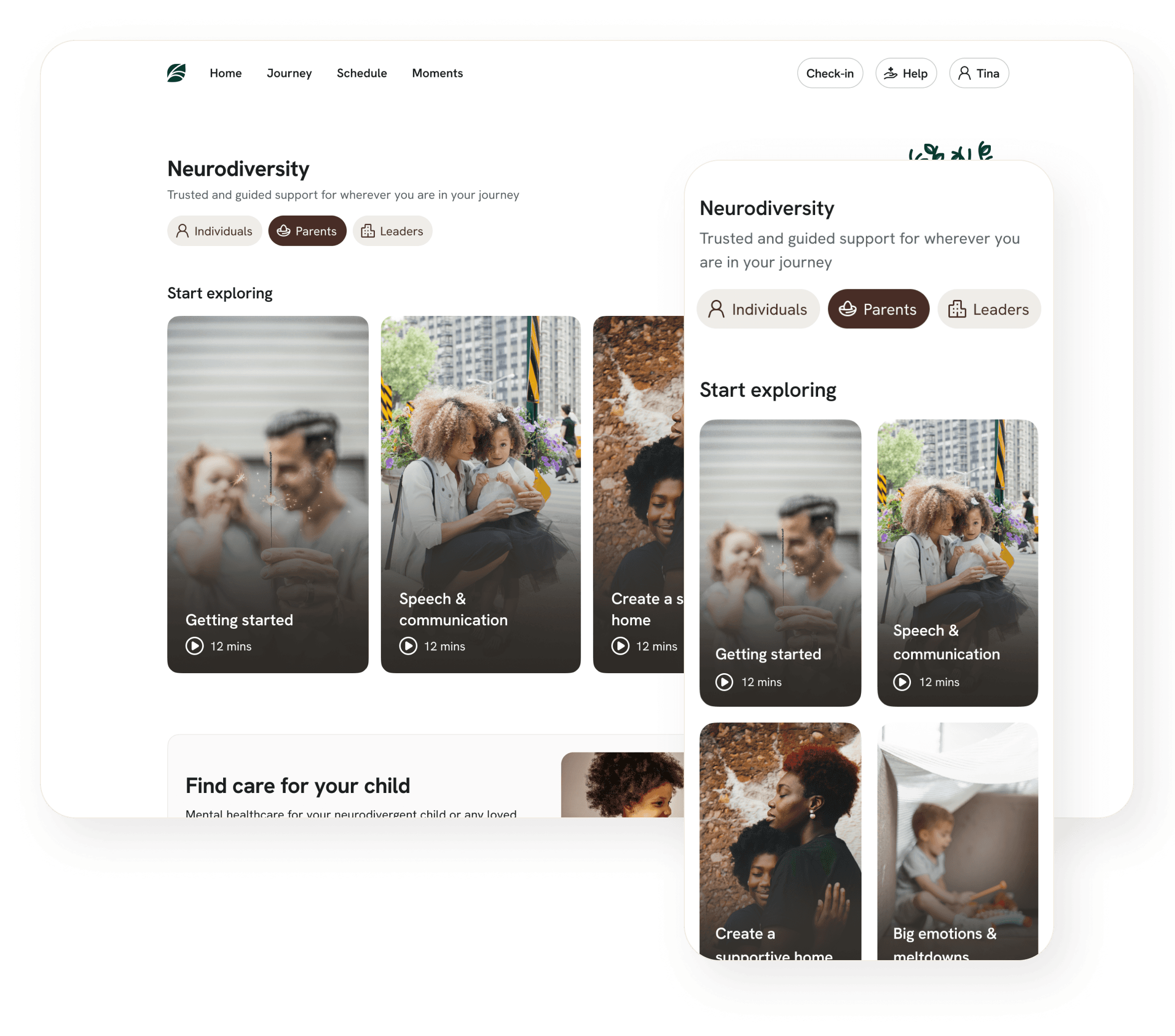
I led the design of Spring Health’s Neurodiversity Hub, a global, personalized experience that helps individuals, parents, and workplace leaders find trusted support and transition into care.
This release positioned the company as an early leader in neurodiversity support within the EAP+ market. We launched the hub in under five months, influenced $7.44M in CACV in its first quarter, and demonstrated that content can serve as an effective on-ramp to therapy and coaching.
I designed the hub in a way that balanced speed, personalization, and clinical responsibility. My designs became a scalable framework later reused by staff designers across multiple product areas.
The core product challenge was balancing speed-to-market (to unlock differentiation and revenue impact) with relevance and personalization (to avoid a generic content library), while staying mindful of clinical responsibility and localization constraints.
My role
I was the lead designer and was responsible for:
User research (customers, members, parents, leaders)
Designing and facilitating a cross-functional ideation workshop
Prototyping (from rough validation → robust testing prototype)
Defining the MVP and designing the final experience
Partnering closely with Product, Engineering, Content, and Clinical
Design QA and unblocking engineering during build
I worked closely with product and engineering. I regularly aligned with clinical and content partners to ensure the experience was helpful and safe.
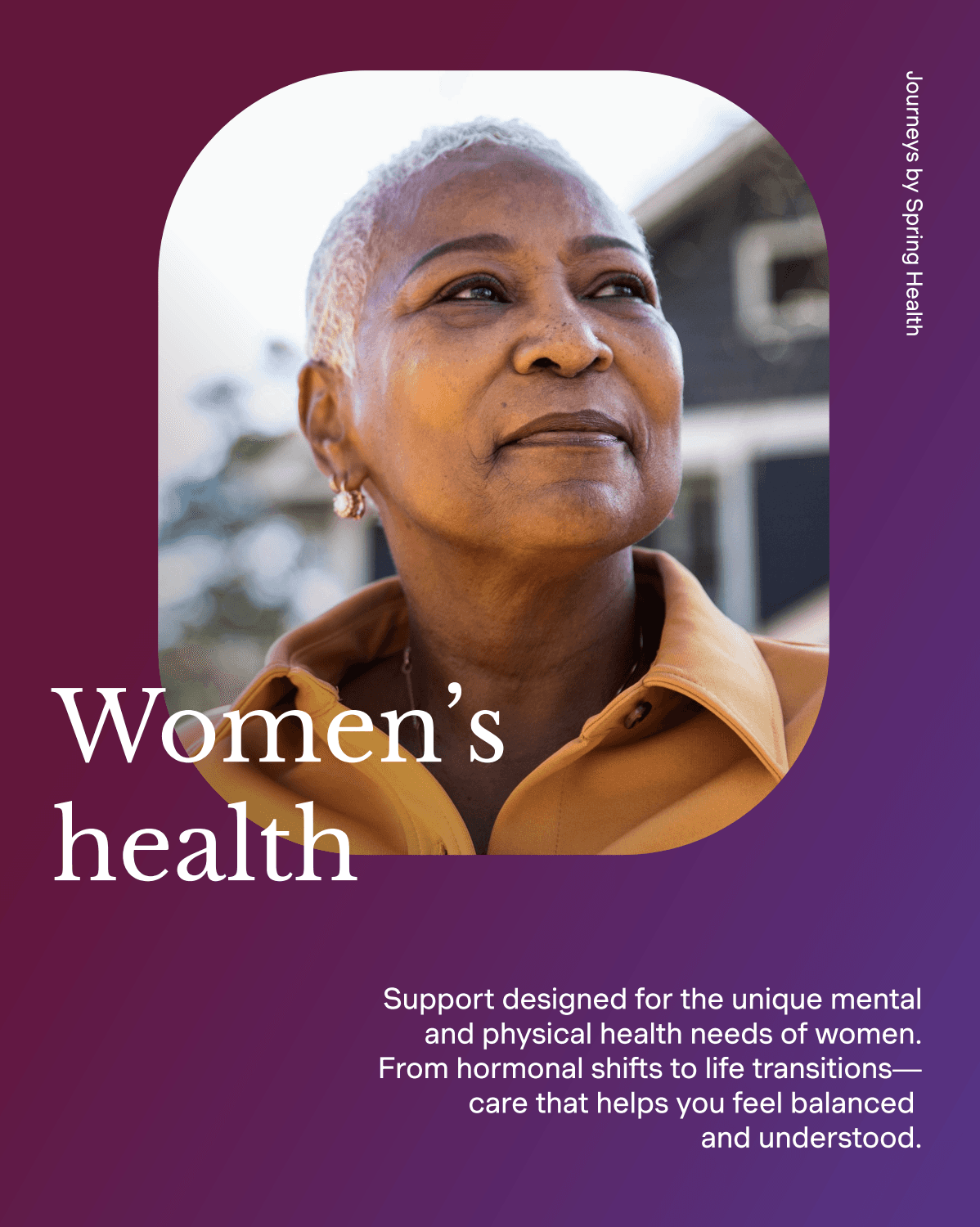
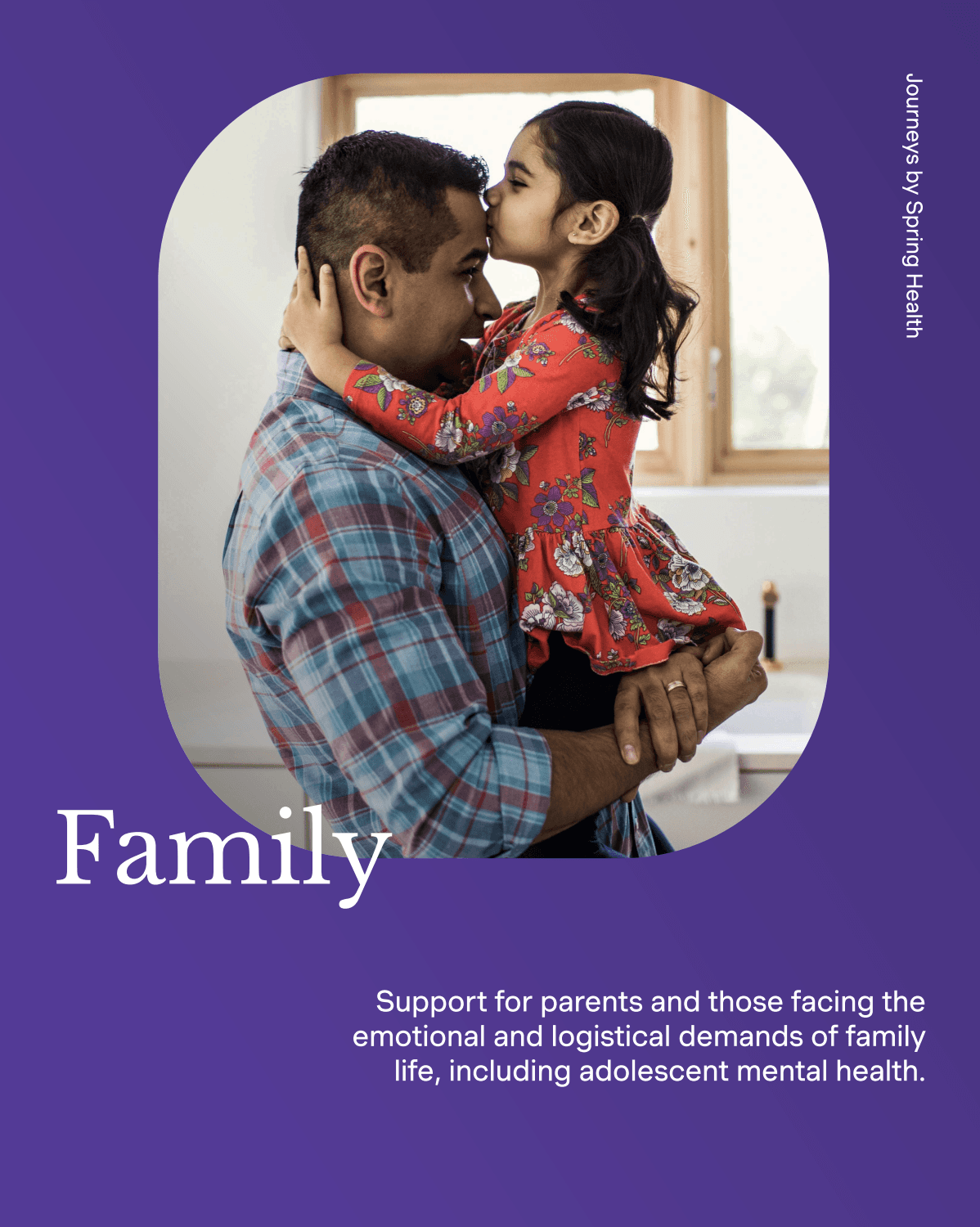
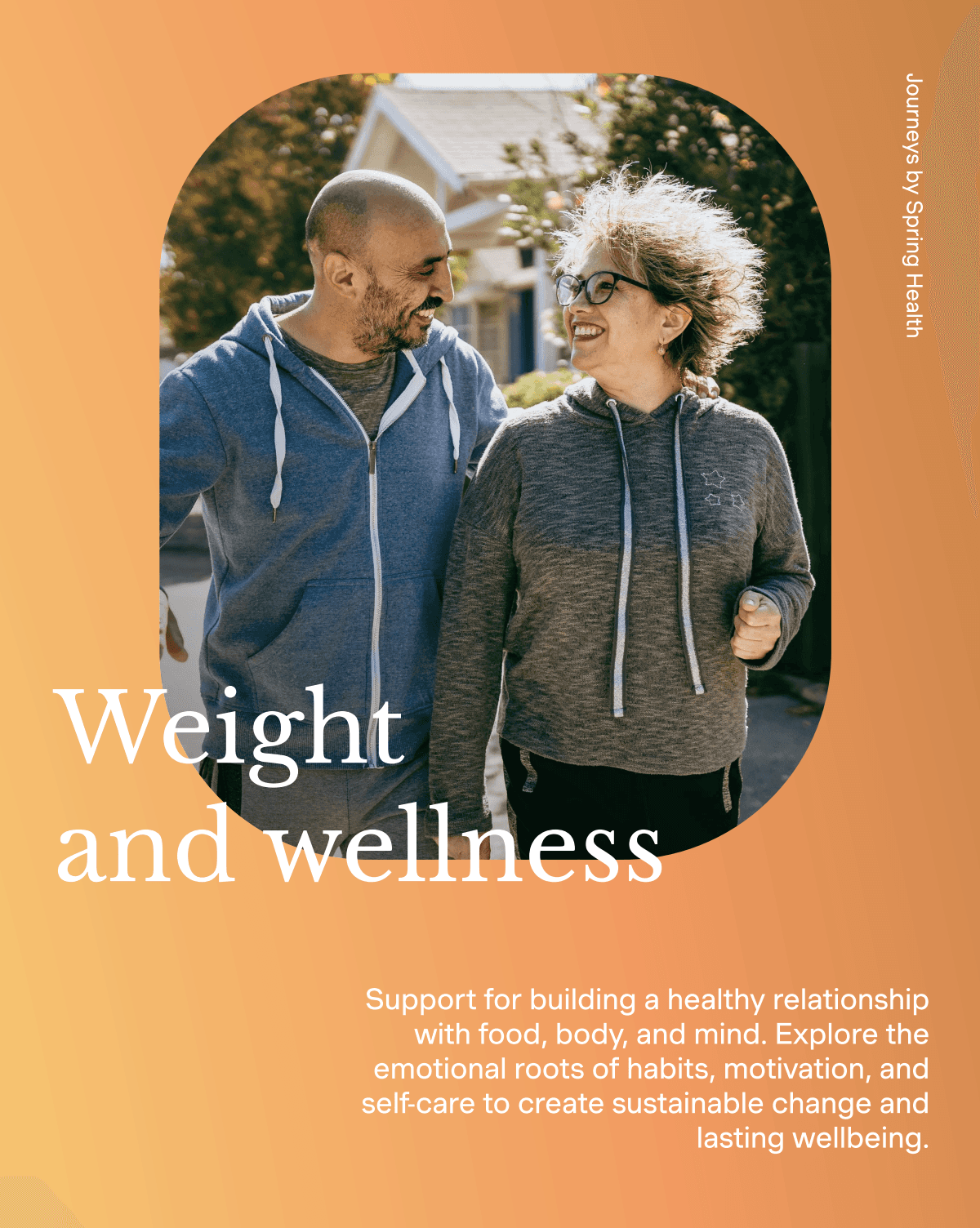
Staff-level impact: The hub structure and patterns I designed were reused with minimal changes to launch additional hubs (women’s health, family support, wellness, weight), extending the impact well beyond this project.
The team
Product
Engineering
Design systems
Content
Clinical
Customer success
Sales
The problem
Neurodivergence (e.g. ADHD, autism, dyslexia) affects a large portion of the population, but support is fragmented and hard to navigate.
We saw three overlapping challenges:
Individuals didn’t know where to start—or felt unsure whether care was “for them”
Parents were overwhelmed by unclear next steps and long evaluation wait times for their children / teens
Leaders wanted to support their teams but lacked practical, trustworthy guidance
At the same time, customers were increasingly asking for neurodiversity support—and competitors were starting to talk about it without shipping strong, usable solutions.
The risk wasn’t just missing a market opportunity. It was shipping something that felt generic, confusing, or clinically irresponsible.
Why this mattered
This work directly supported growth, differentiation, and utilization:
Neurodiversity had emerged as a top customer priority.
We determined that being first to market with a useful and usable solution would be a real differentiator in the eyes of benefits consultants and customers.
We believed content could build trust and lead members into care. This project was a chance to validate that hypothesis while shipping fast.
Design vision
Create a scalable and personalized neurodiversity experience that meets people where they are. The experience should guide users towards meaningful support at their own pace.
Key decisions
The experience delivers personalized education, tools, and pre-filtered care pathways for individuals, parents, and leaders, while remaining clinically responsible and globally scalable.
01
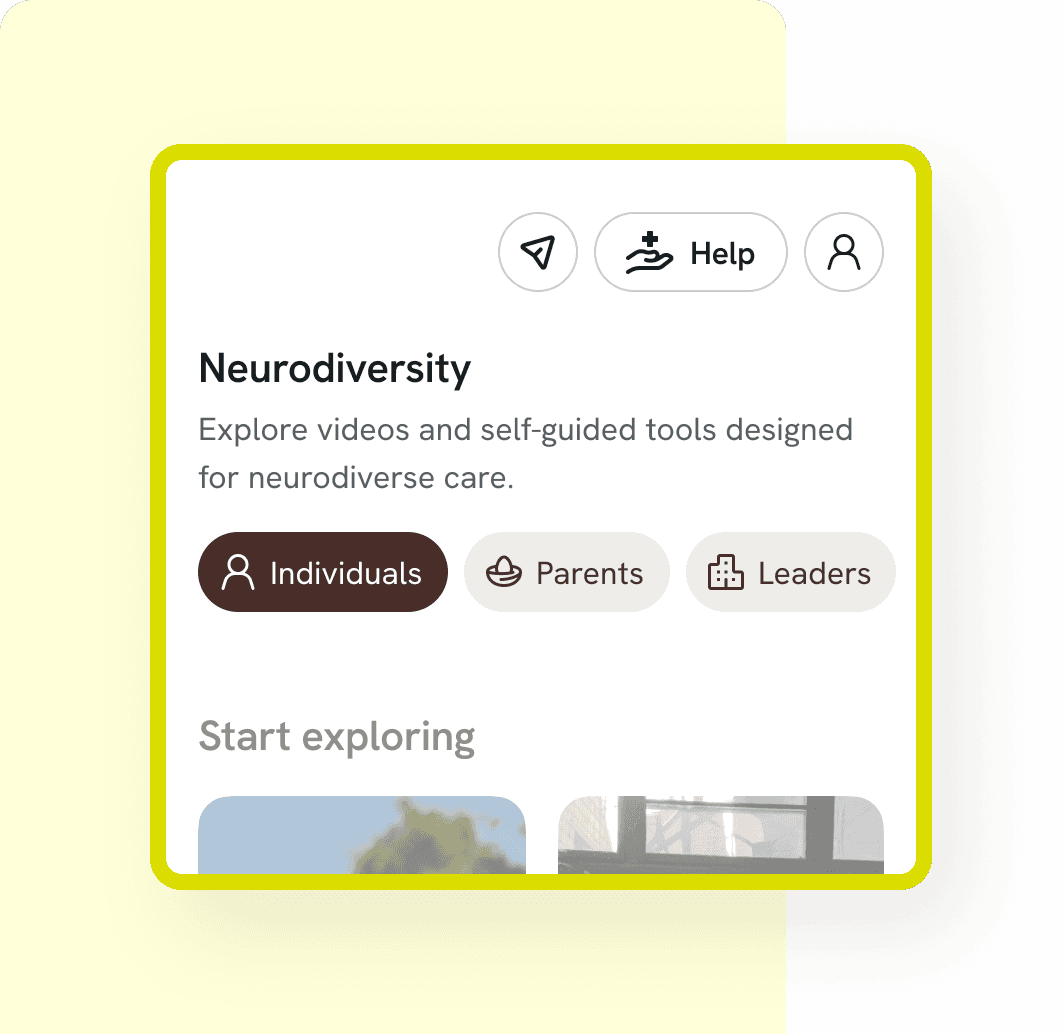
One hub, multiple personas
Rather than splitting the experience, we designed a single hub with clear pathways for individuals, parents, and leaders.
02
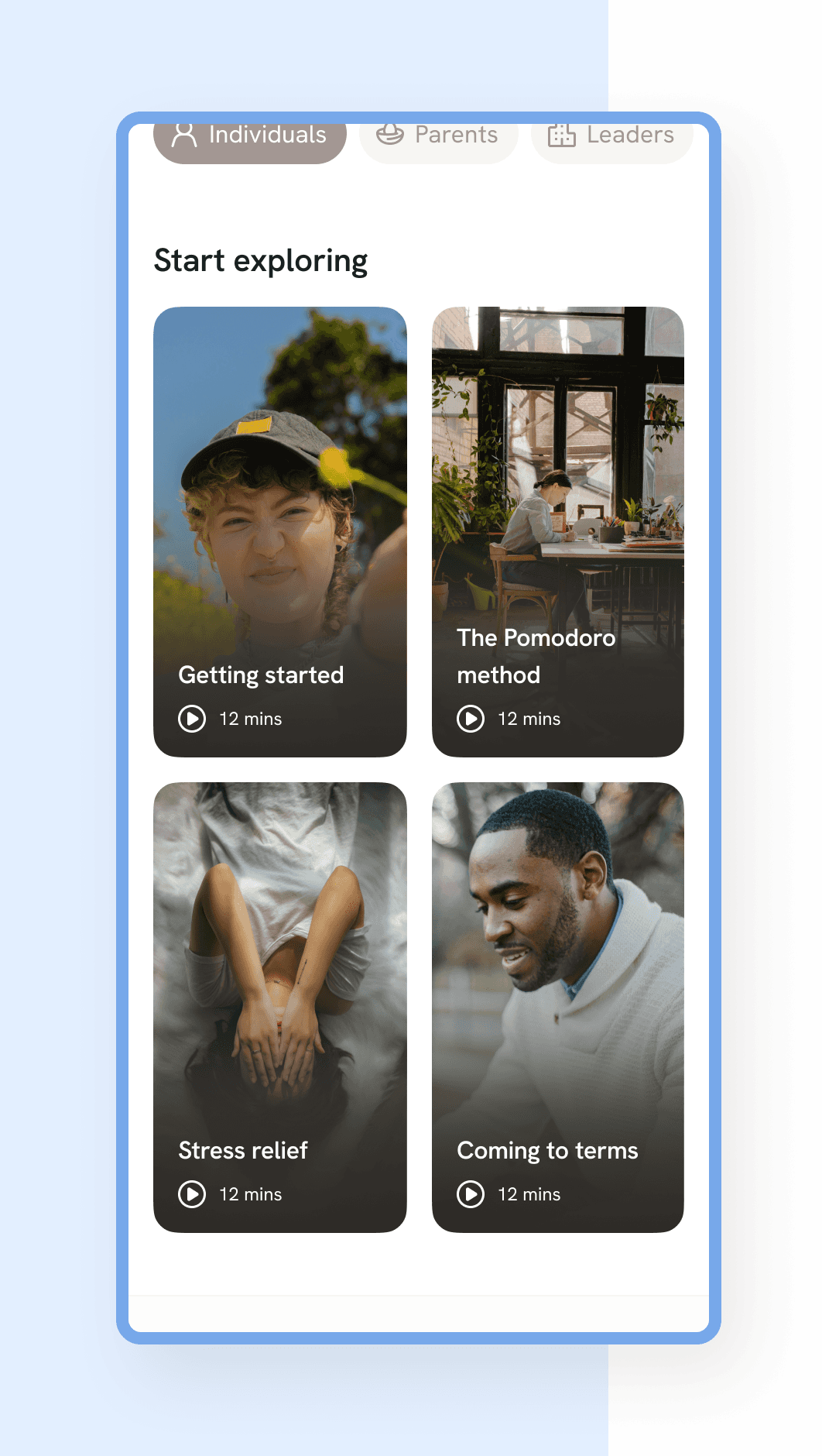
All-new clinically safe, globally ready content
We launched globally with evergreen, translated content and deferred more complex, localized diagnostic guidance to later phases.
Tension point
Design and content were developed in parallel, which required close collaboration with the clinical content team. Clinical partners pushed for comprehensive coverage, while I advocated for tighter, more digestible content to avoid overwhelming users. Together, we aligned on a balance that preserved clinical integrity without sacrificing usability.
03
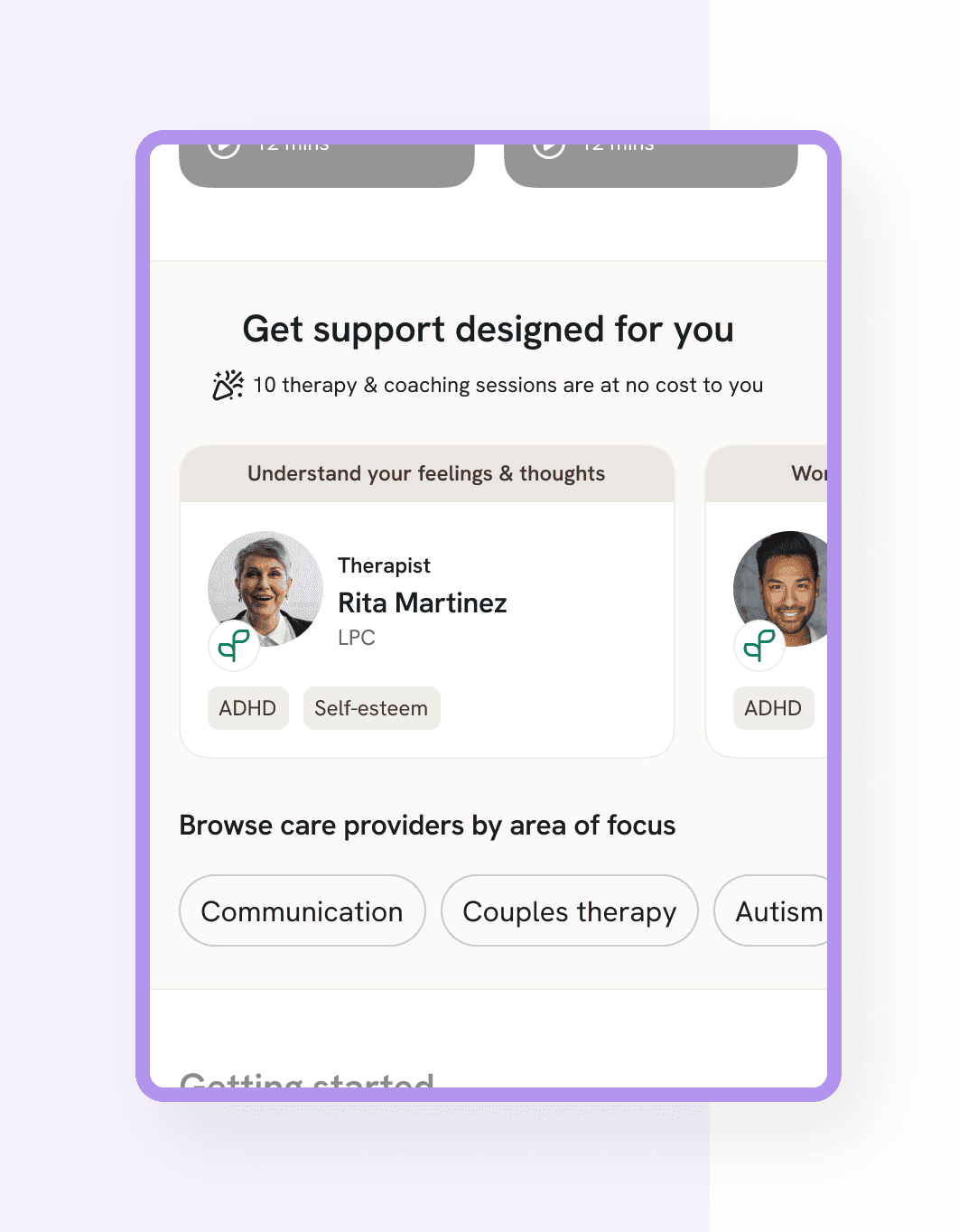
Content as a bridge to care
Content wasn’t treated as an end state. We intentionally paired it with pre-filtered therapy and coaching options, making it easy to move from learning → action.
04
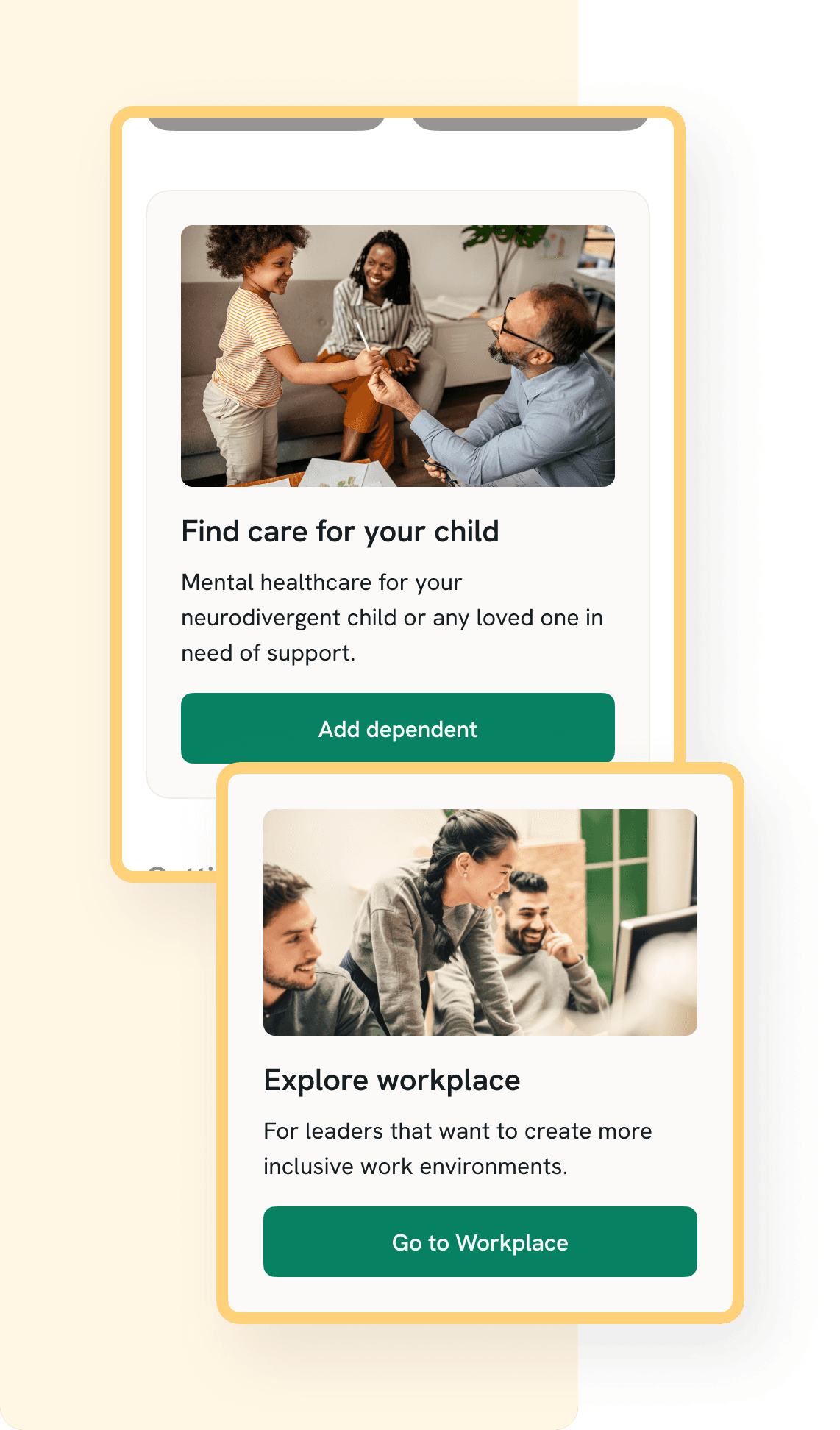
Additional benefits such as Neuropsychological testing
I designed modular components that could be used to highlight relevant benefits available to the member. This varied depending on what customers purchased for their employees.
Impact
Revenue
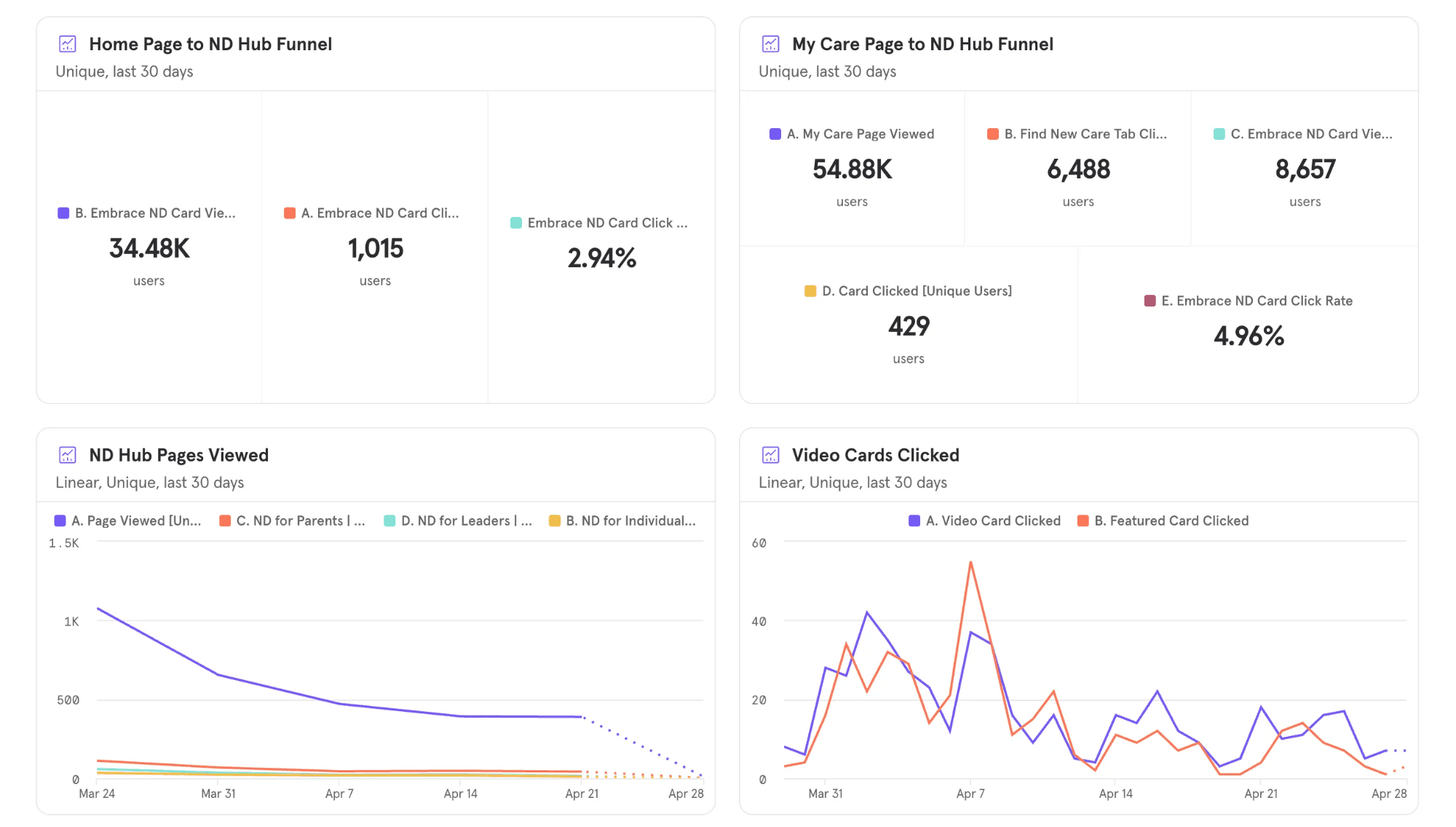
$7.44M in CACV influenced in Q1 2025
Customer impact
One major customer eliminated a competing vendor after seeing the hub:
“They're turning off Rethink in favor of the ND hub. They love the focus on family support, adult support, and manager support… The concept of organized content, core services, and upsell services really landed.”
High member adoption
44.2% adoption (members interacted with 2+ distinct items)
Increased conversion
16% of hub users booked therapy or coaching
Members often explored videos or tools first, then scheduled with a therapist or coach using the filtered provider experience.
Approach overview
The Neurodiversity Hub was built through a lean, iterative approach that prioritized early validation, relevance over volume, and fast execution. Rough prototypes helped confirm demand before deeper discovery, and the final MVP balanced personalization, clinical integrity, and global scalability.
We delivered the MVP ahead of schedule and without any major or disruptive bugs. This allowed us to quickly jump into the next set of features while evaluating the MVP.
01
Discovery
Key activities
Demand validation
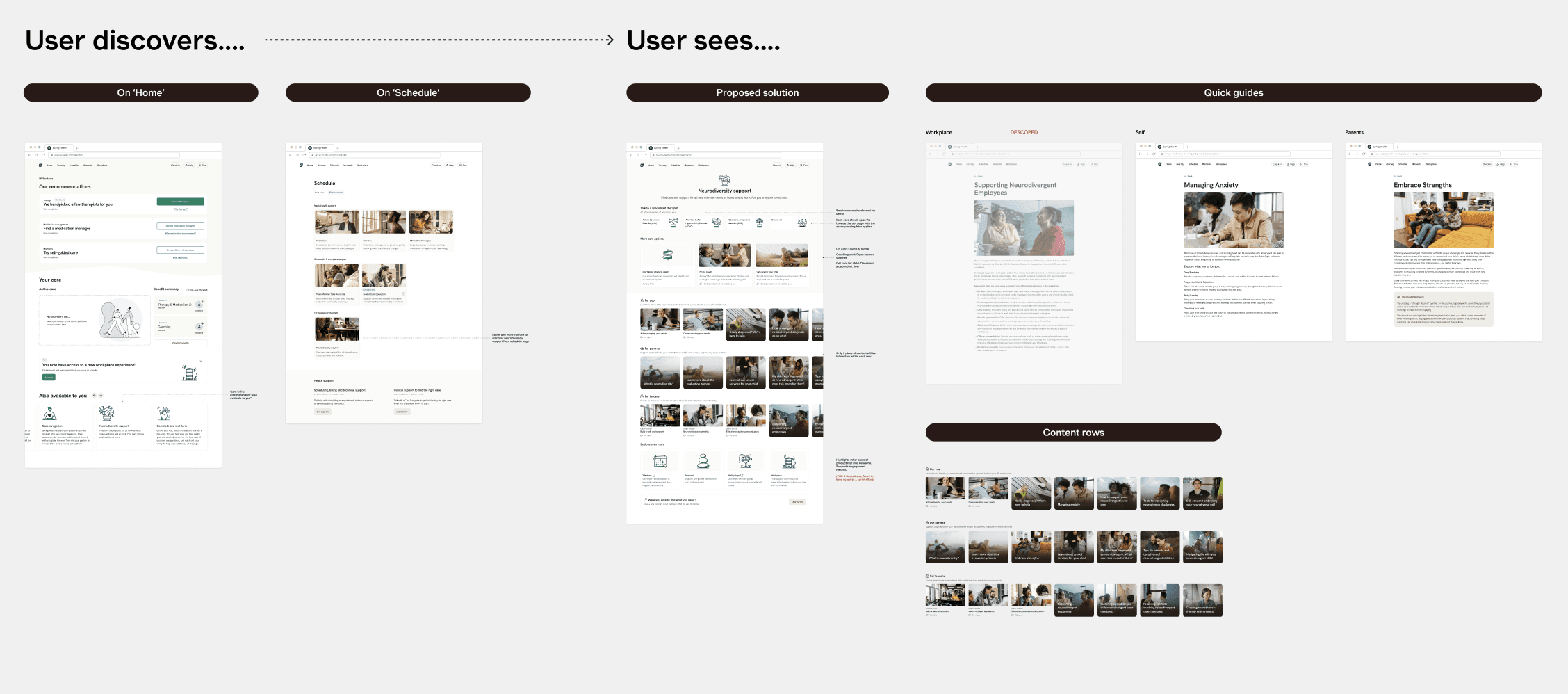
Quickly designed a lightweight concept of the neurodiversity hub for our sales & customer success teams to show in conversations with new and renewing customers.
User research
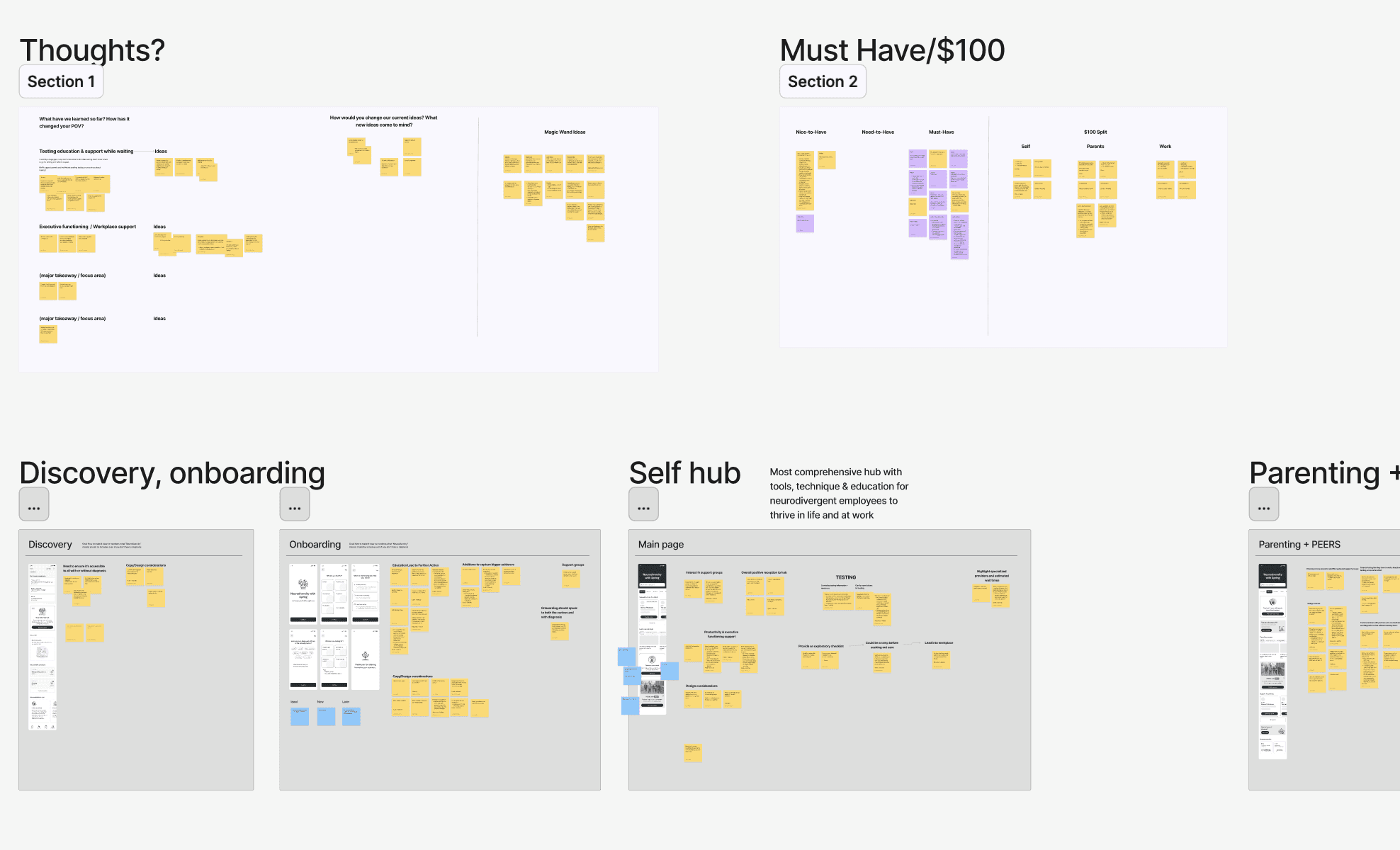
We spoke with customers, neurodivergent members, and parents of neurodivergent children to understand:
What felt genuinely helpful vs. overwhelming
Where Spring Health could realistically add value
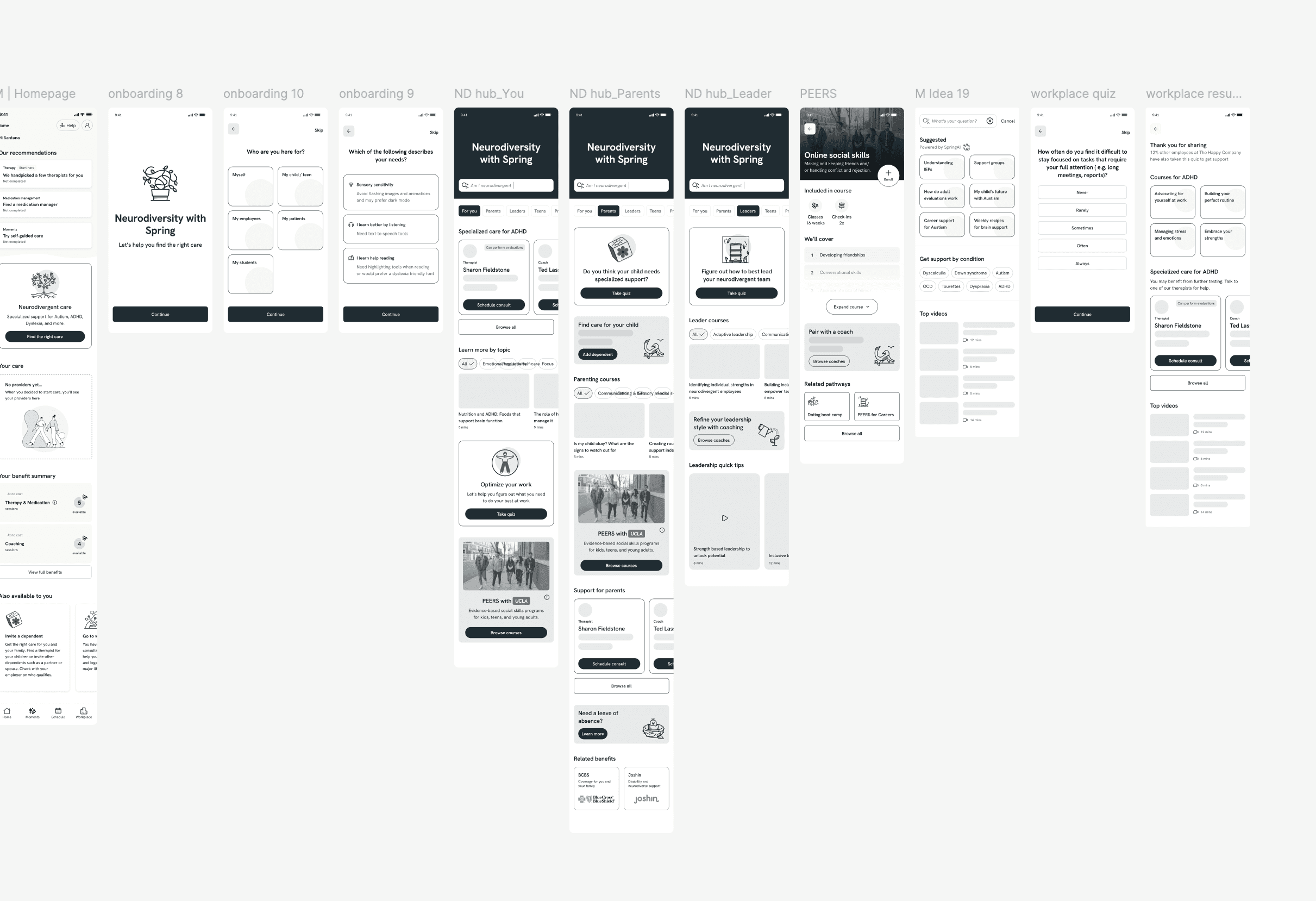
Test a comprehensive prototype using figma
Tension point
The project began with a solution sketch from leadership and an ask to build a scrappy version within a few sprints for testing. I mocked up that idea and, in parallel, explored an alternative based on quick research and valuable input from our engineering team. The alternative proved faster to build using existing components and better aligned with the assumptions both leadership and our team wanted to test.
02
Ideation
Key activities
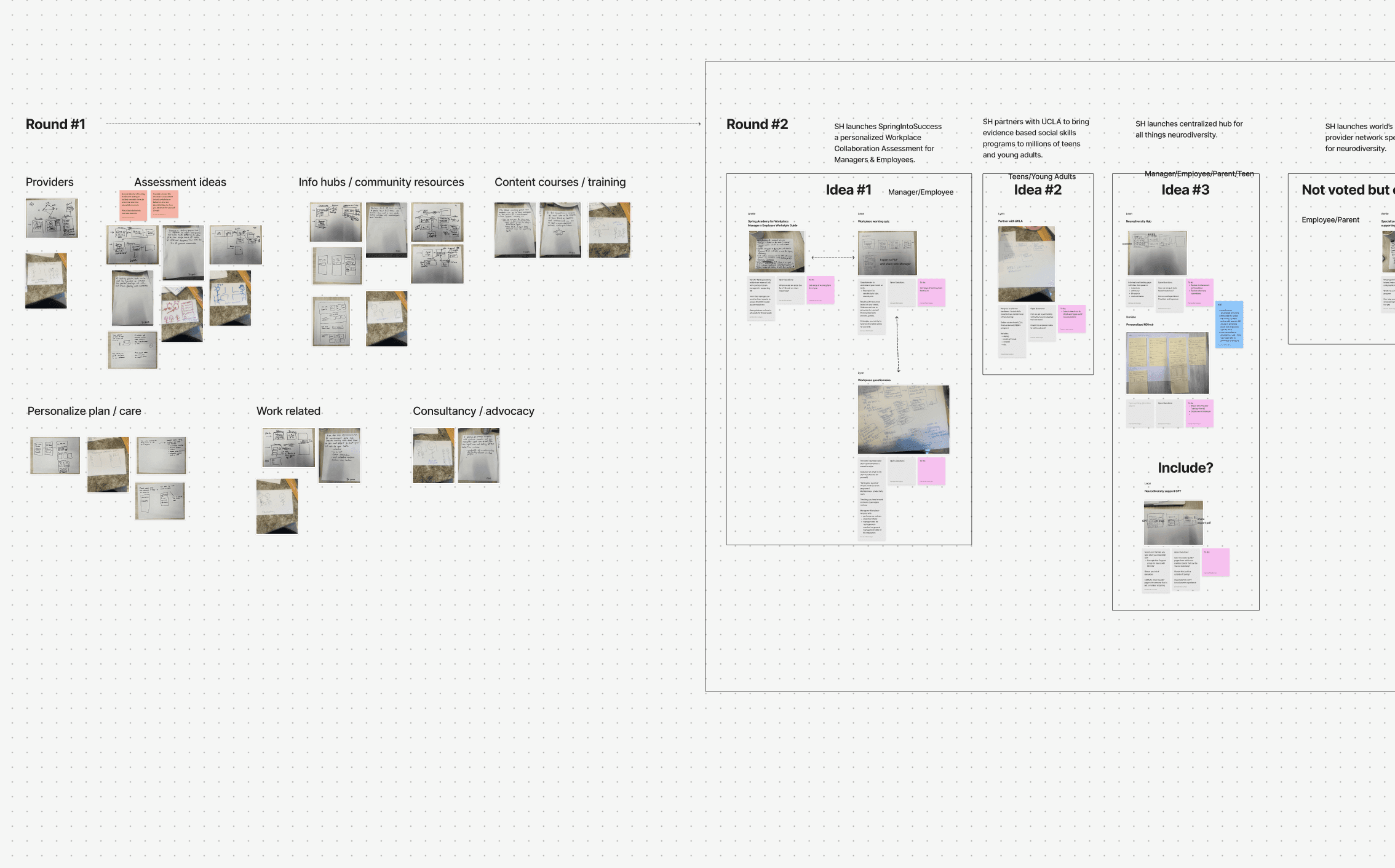
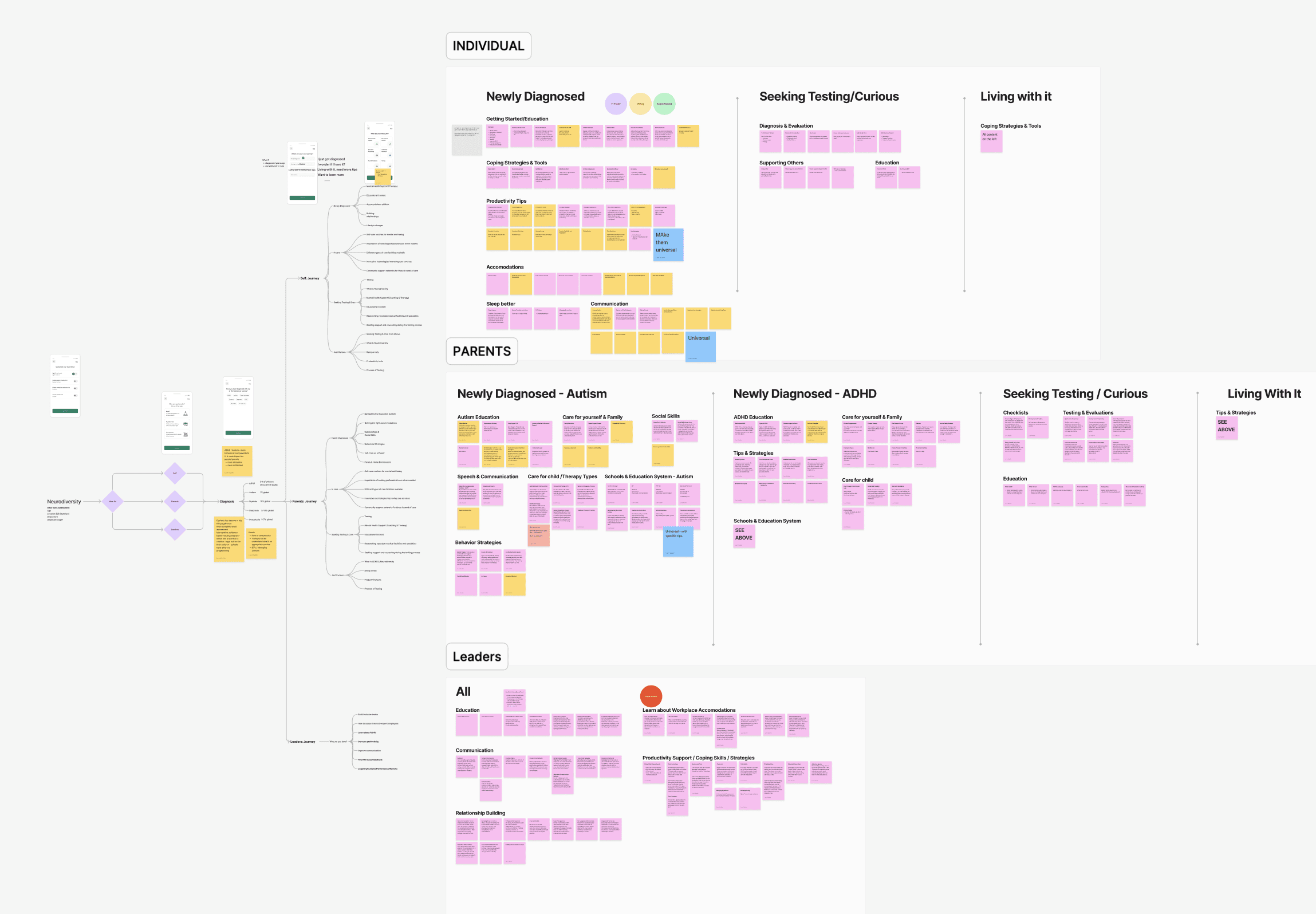
Cross-functional ideation workshop
I facilitated an ideation workshop with product, engineering, content, and clinical partners. This helped us:
Align on our learnings from user research
Surface constraints early (clinical risk, localization, feasibility)
Iterate on the ideas that aligned with our findings
Slim to an MVP shippable within 1 quarter
After synthesizing research and feedback, we made a deliberate call to cut scope and focus on what we could ship quickly. Some high-demand areas were strategically deferred as a quick follow-up. This let us move fast and build incrementally without over-promising.
03
Refinement
Key activities
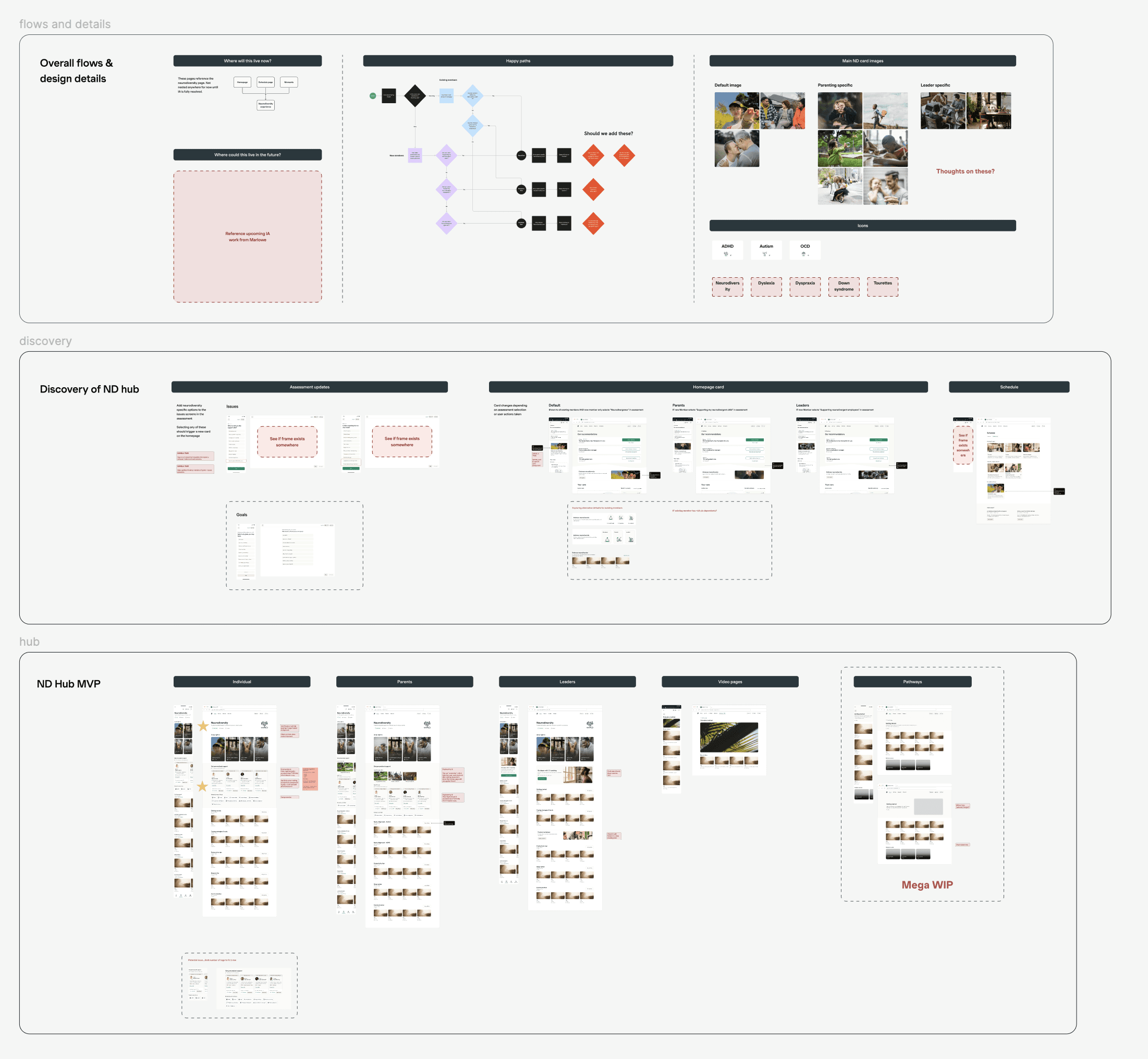
Iteration through critique and feedback
I led iterative critiques with product, engineering, content, and clinical partners to resolve open questions and pressure-test my design decisions. Critique focused on reducing cognitive load, clarifying edge cases, and ensuring clinical accuracy without compromising usability.
Partnering with engineering and design systems
I partnered closely with engineering to ensure designs were buildable within the timeline, prioritizing reuse of existing components. When gaps surfaced, I designed new components and aligned closely with design systems to support consistency and future reuse.
Prioritizing impact over polish
As timelines tightened, I made deliberate calls on where refinement would meaningfully improve outcomes versus where iteration could happen post-launch. This helped the team maintain momentum and protect quality. We delivered ahead of schedule to support customer deals in the same quarter.
04
Hand-off & testing
Key activities
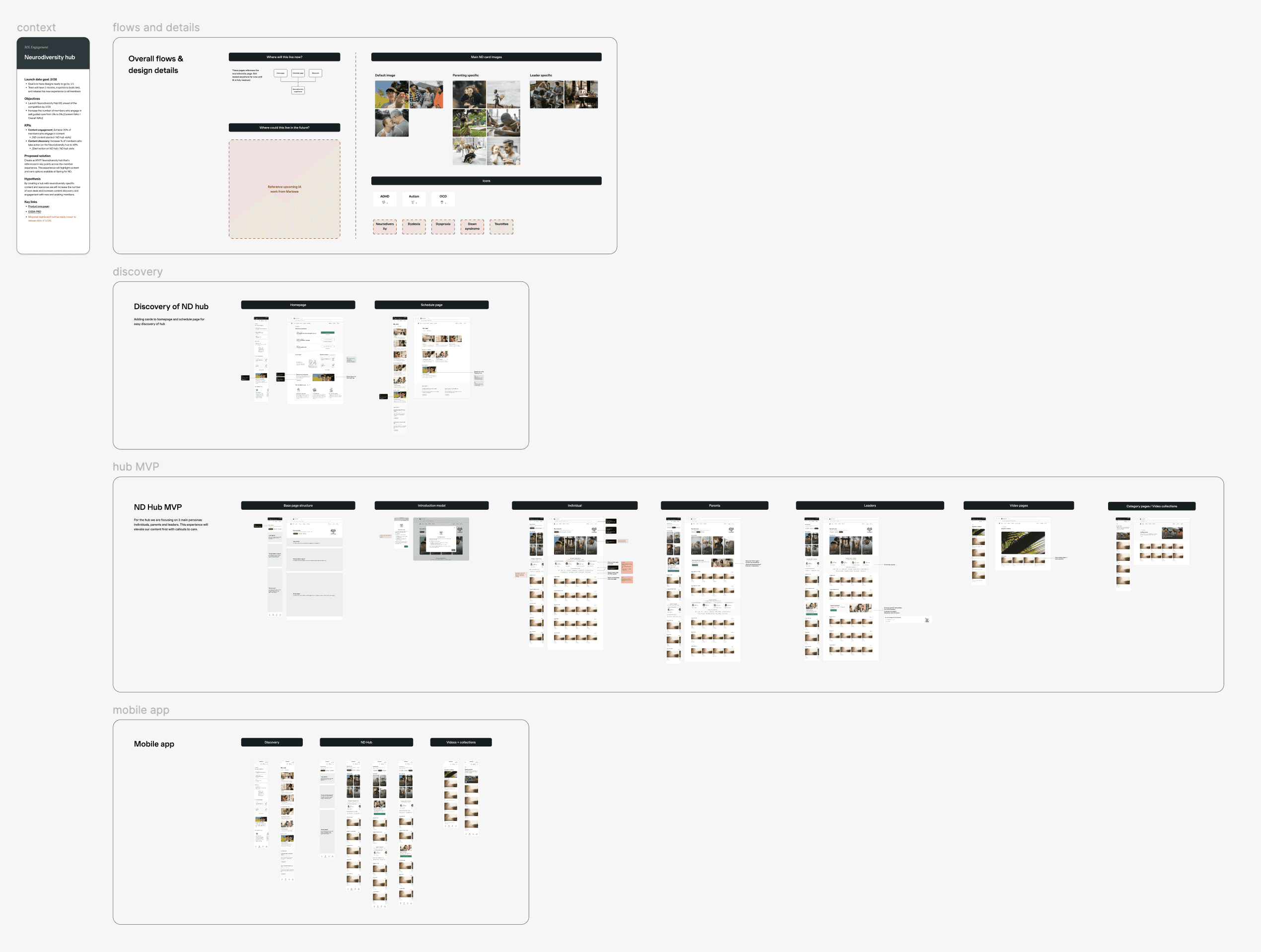
Active handoff and implementation partnership
I stayed involved through build to help resolve issues and constraints as they came up. I set up weekly office hours to pair with engineers to unblock questions quickly.
Design QA
I conducted design QA across platforms, checking visual and interaction details, as well as edge cases. When discrepancies arose, I worked with engineering to fix. In some cases with unforeseen limitations, I adjusted designs while preserving usability.
Final thoughts
By balancing speed to market with personalization and clinical care, these decisions helped set a scalable foundation that other staff designers reused to launch new product areas:
See press release
What I'd improve next
There were a number of features I'd designed that had to be cut in order to meet our timelines such as:
Accessibility controls - Some users may benefit from dyslexic friendly fonts, dark mode, reducing animations, etc. These controls would have improved accessibility not just of this feature, but for the broader Spring Health member experience.
Onboarding assessment - Provide users with a way to personalize the experience across the personas. For example, one user could be neurodivergent themselves, parent to a neurodivergent child, and trying to create an inclusive environment for their team at work.
Based on what we learned post-launch, I would also improve:
Clearer entry points - Some users may benefit from dyslexic friendly fonts, dark mode, reducing animations, etc. These controls would have improved accessibility not just of this feature, but for the broader Spring Health member experience.
Explicit parenting pathways - Some parents may suspect their child is neurodivergent or maybe they are trying to navigate a newly found diagnosis. Something we learned in research is that parents are seeking general next steps based on where they are in their child's journey
Final thoughts
This project wasn’t just about shipping content. Our ultimate goal was to make neurodivergent support feel approachable, relevant, and actionable across the key identified personas. The biggest win was proving that a well-designed hub can meet people where they are and guide them into finding the right care for themselves or someone else.
For a deeper dive into this case study
Get in touch: